
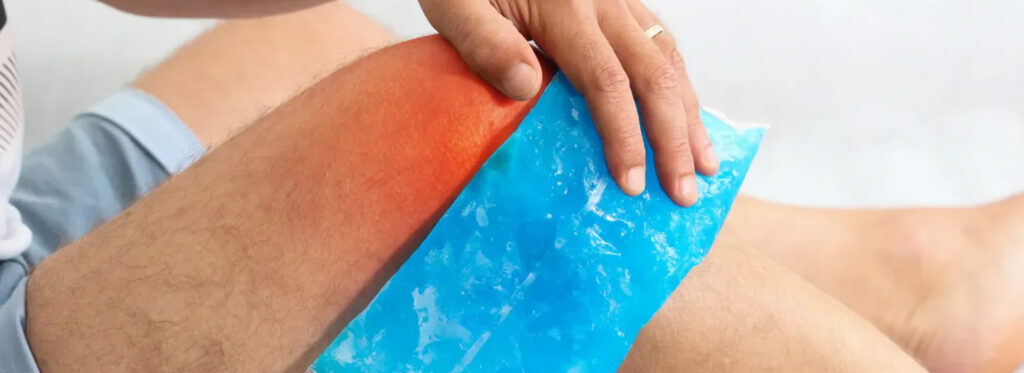
The RICE method is a well-known first aid technique. It helps manage sudden injuries, especially soft tissue injuries like sprains, strains, and bruises.
Let’s explore what the RICE method stands for and its proper usage.
What Does the RICE Method Stand For?
The R.I.C.E. The method is a well-known way to manage soft tissue injuries. It is especially useful in the first few days after an injury happens.
R.I.C.E. represents Rest, Ice, Compression, and Elevation.
Here’s the benefit of each element:
1. Rest: Allowing the injured area to rest helps prevent further damage and promotes healing. Avoiding weight or pressure on the injured part is crucial.
2. Ice: Using ice on the injury aids in minimizing swelling and alleviating pain. It constricts blood vessels, which decreases inflammation and can relieve discomfort. Experts usually advise icing the area for 15 to 20 minutes every 1 to 2 hours. This is especially important in the first 48 hours.
3. Compression: Wrapping the injured area with a compression bandage helps reduce swelling and provides support. It can keep the injury stable and limit further movement that could aggravate the condition.
4. Elevation: Keeping the injured body part raised above the heart helps reduce swelling. This allows fluids to drain away from the injury. You can prop the injured area on pillows.
How Does the Rice Method Help with an Injury?
When applied together, these R.I.C.E. strategies can effectively manage pain and promote quicker recovery from injuries like sprains, strains, and minor soft tissue injuries.
Always consult with a healthcare professional for a proper diagnosis and treatment plan tailored to your specific situation.
Injuries the RICE Method is Best for Treating?
The RICE method is best for treating various acute injuries, particularly soft tissue injuries. Some common injuries that benefit from the RICE treatment include:
- Sprains- Injuries to ligaments, like an ankle sprain.
- Strains- Overstretching or tearing of muscles or tendons, such as a hamstring strain.
- Bruises – Contusions resulting from a direct blow or impact.
- Tendonitis – Inflammation of a tendon, especially in the early stages.
- Minor fractures – Conditions like stress fractures may also benefit initially from RICE.
What Should You Not Use the RICE Method For?
Certain injuries and conditions do not benefit from the RICE method or should not use it.
- Severe to Moderate Fractures
- Severe Injuries
- Open Wounds
- Infections
- Chronic Conditions
- Knee or Elbow Injuries
Assessing the injury carefully and consulting with a healthcare professional for appropriate treatment in these cases is important.
When to Seek Healthcare from a Professional for an Injury?
Certain injuries require professional healthcare for diagnosis and treatment. Never tough out an injury. It can lead to long-term issues, pain, and may never heal correctly.
- Severe Pain
- Swelling and Bruising
- Inability to Move the Affected Area
- Open Wounds
- Deformity
- Numbness or Tingling
- Management of Chronic Conditions
- Unusual Symptoms
- Mood Changes
- Follow-Up on Minor Injuries
If in doubt, it’s always better to err on the side of caution and consult a healthcare professional.